Resources
Field Reports
HDPE Gravity Sewer Helps McKinney, Texas Prepare for Continued Growth
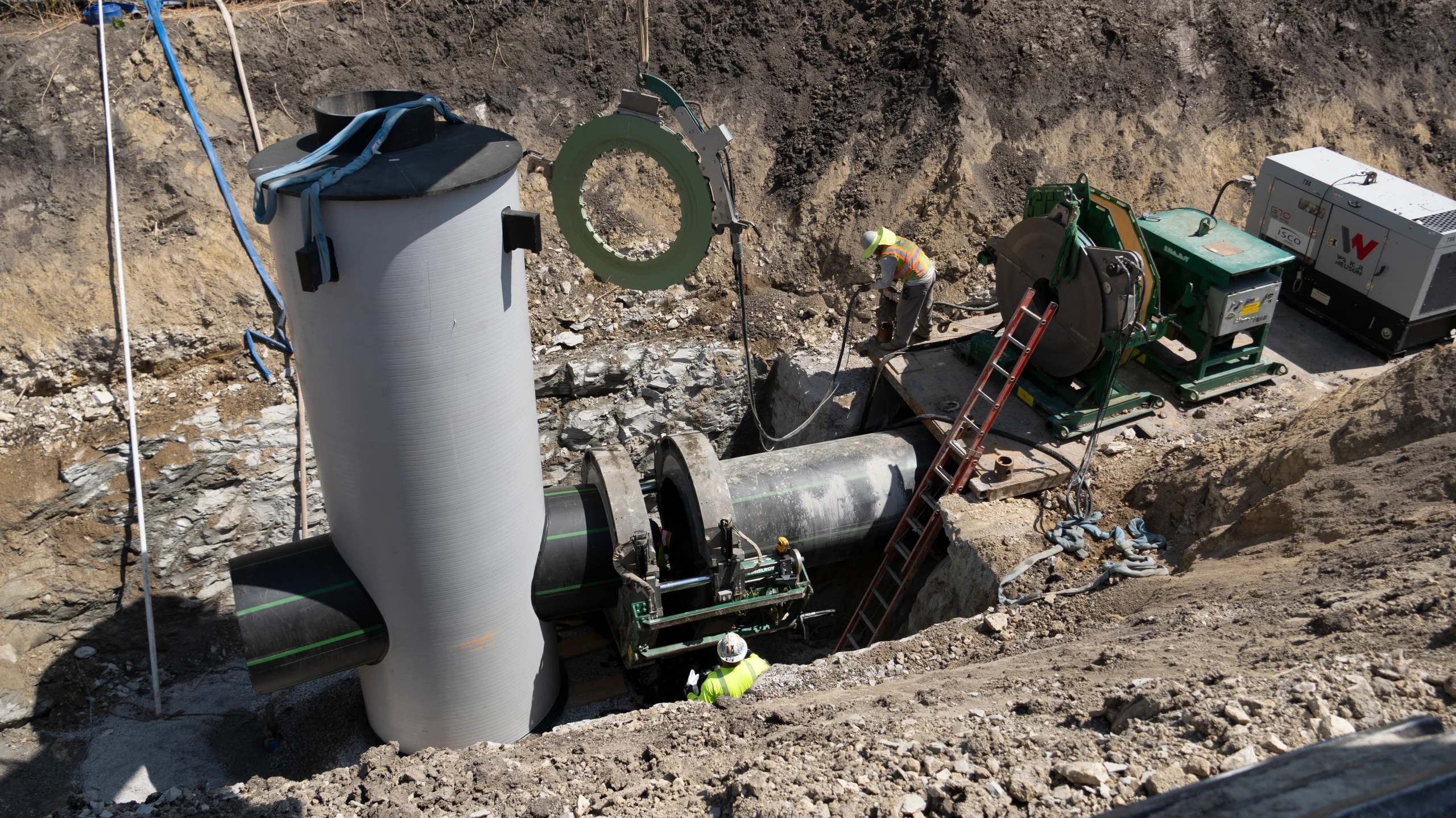
McKinney, Texas is situated about 32 miles north of Dallas. The county seat of Collin County is one of the fastest-growing cities in the U.S., bringing increased demand for reliable water and wastewater infrastructure.
With that growth comes the need to address infrastructure, both introducing new builds and repairing or replacing failing systems, and the City of McKinney is readily aware.
North of McKinney, a legacy sanitary sewer system along Honey Creek with mechanical connections needed to be replaced and upgraded.
The Challenge: Inflow and Infiltration
While leaking is a common problem with legacy piping systems, the Honey Creek sewer was also experiencing inflow and infiltration (I&I). The old sanitary system was taking in stormwater and groundwater, sending water that didn’t need treatment through the wastewater system and consuming treatment capacity.
The replacement system incorporates heat-fused HDPE pipe, creating a continuous piping system designed to minimize potential leakage and infiltration points associated with mechanical joints.
Taking the Fusible System Through the Manhole
Manholes provide critical access points along a sanitary sewer system. While HDPE pipe can transition to conventional concrete manholes, the Honey Creek project took a different approach.
Enter ISCO and Spirolite.
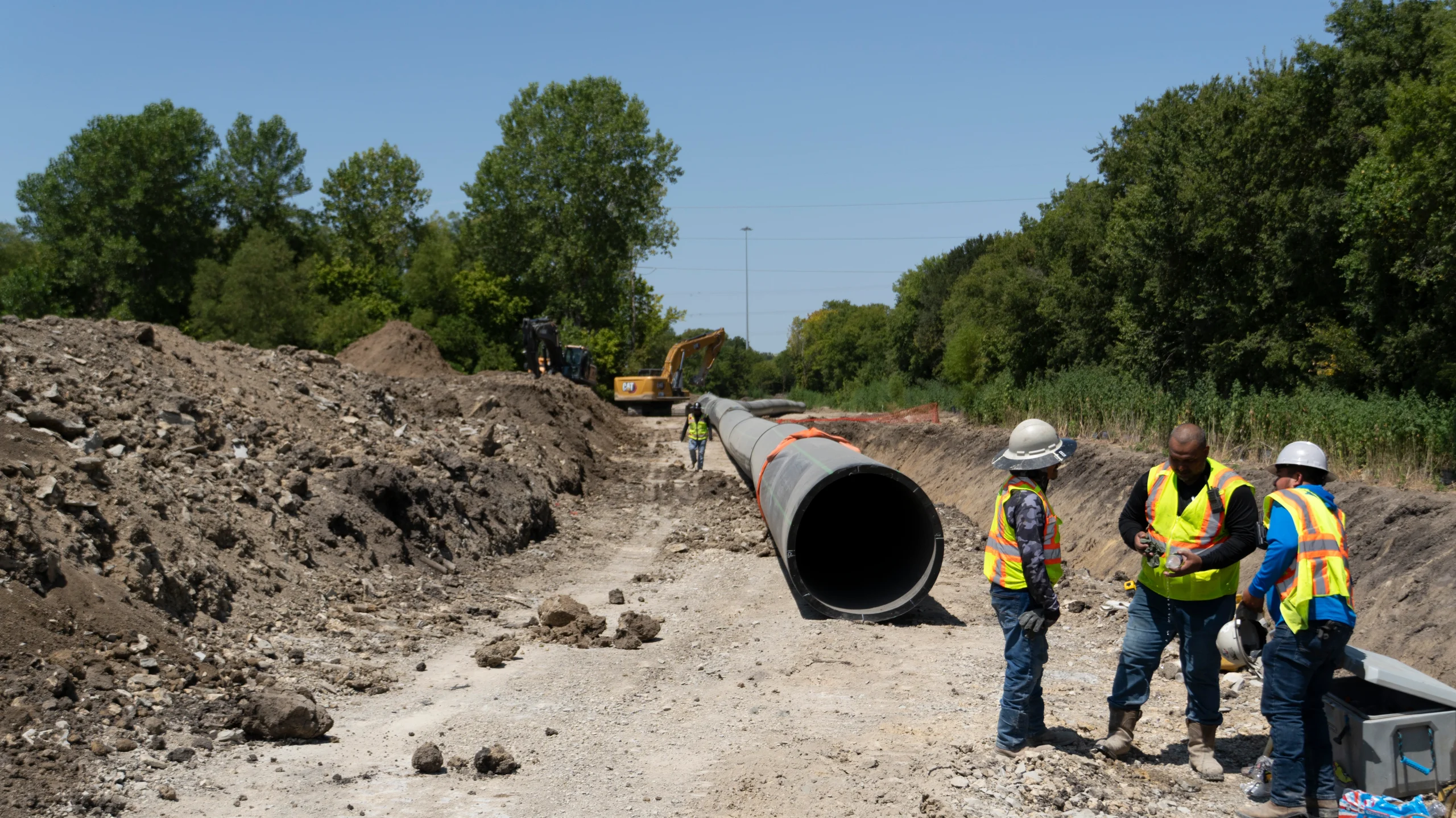
With an eye toward McKinney’s continued population growth, the job demanded pipe that matched that expansion, including approximately 1,300 feet of 42-inch DIPS DR 21 and 6,200 feet of 48-inch DIPS DR 21 HDPE pipe.
Fusion Above Ground, Installation Below
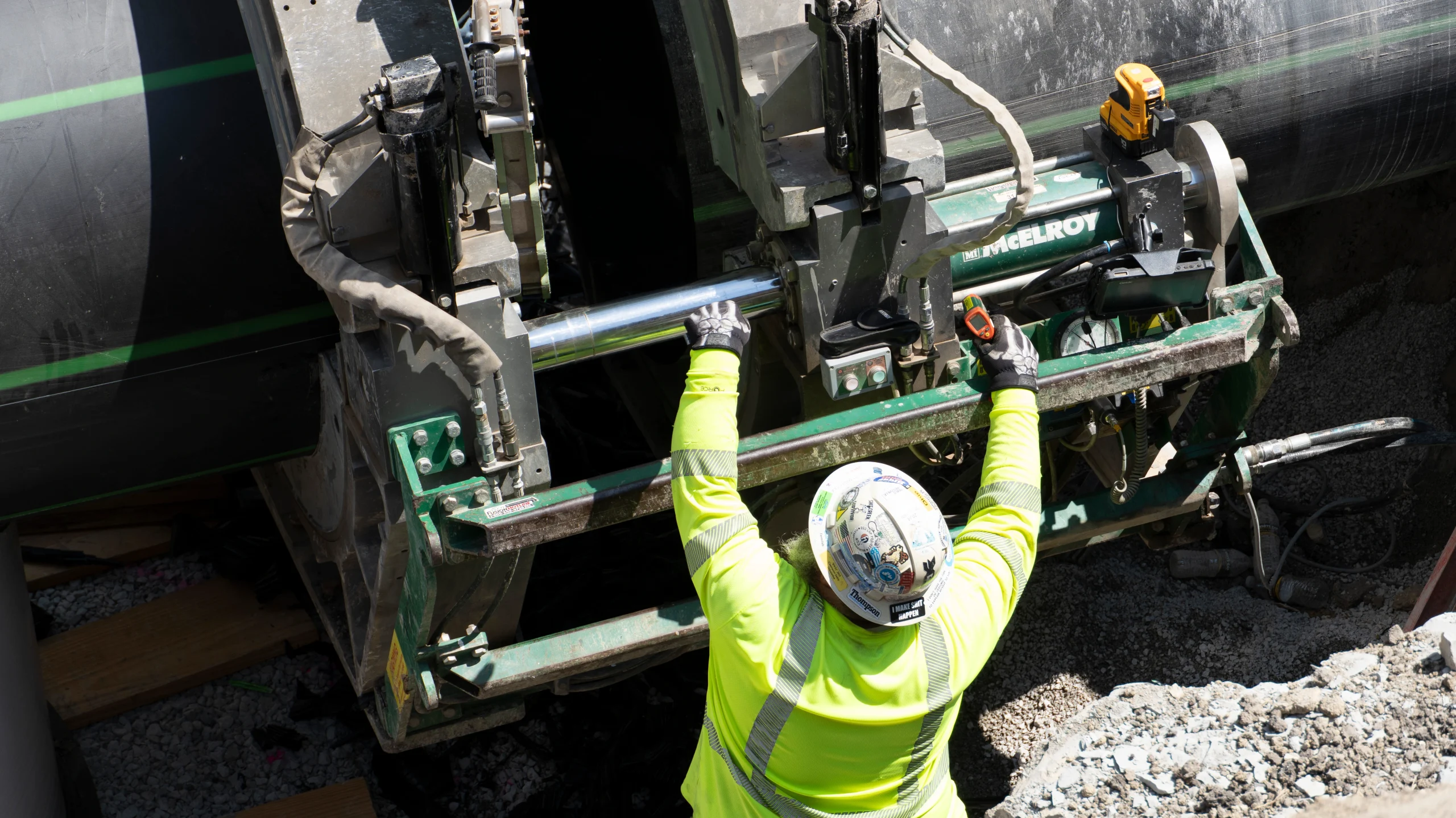
The 50-foot sticks of pipe were fused into approximately 300-foot spool sections by ISCO Field Technician Scott Masticola using a McElroy PB 2065 while the trenches were being dug and other preliminary work was completed.
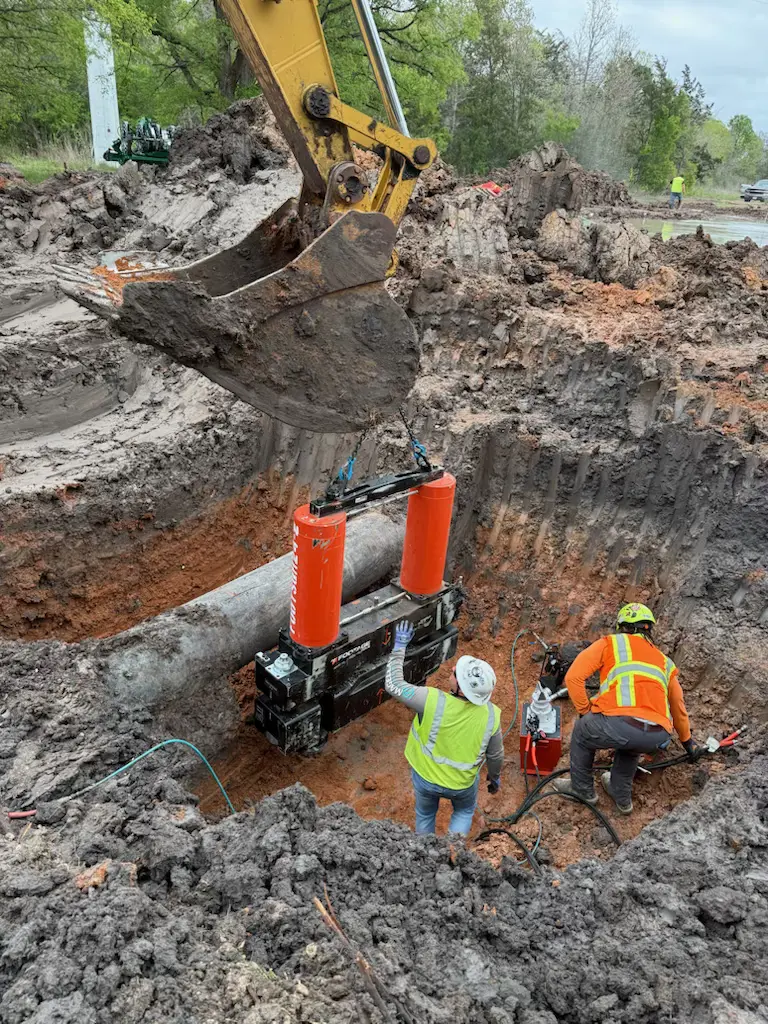
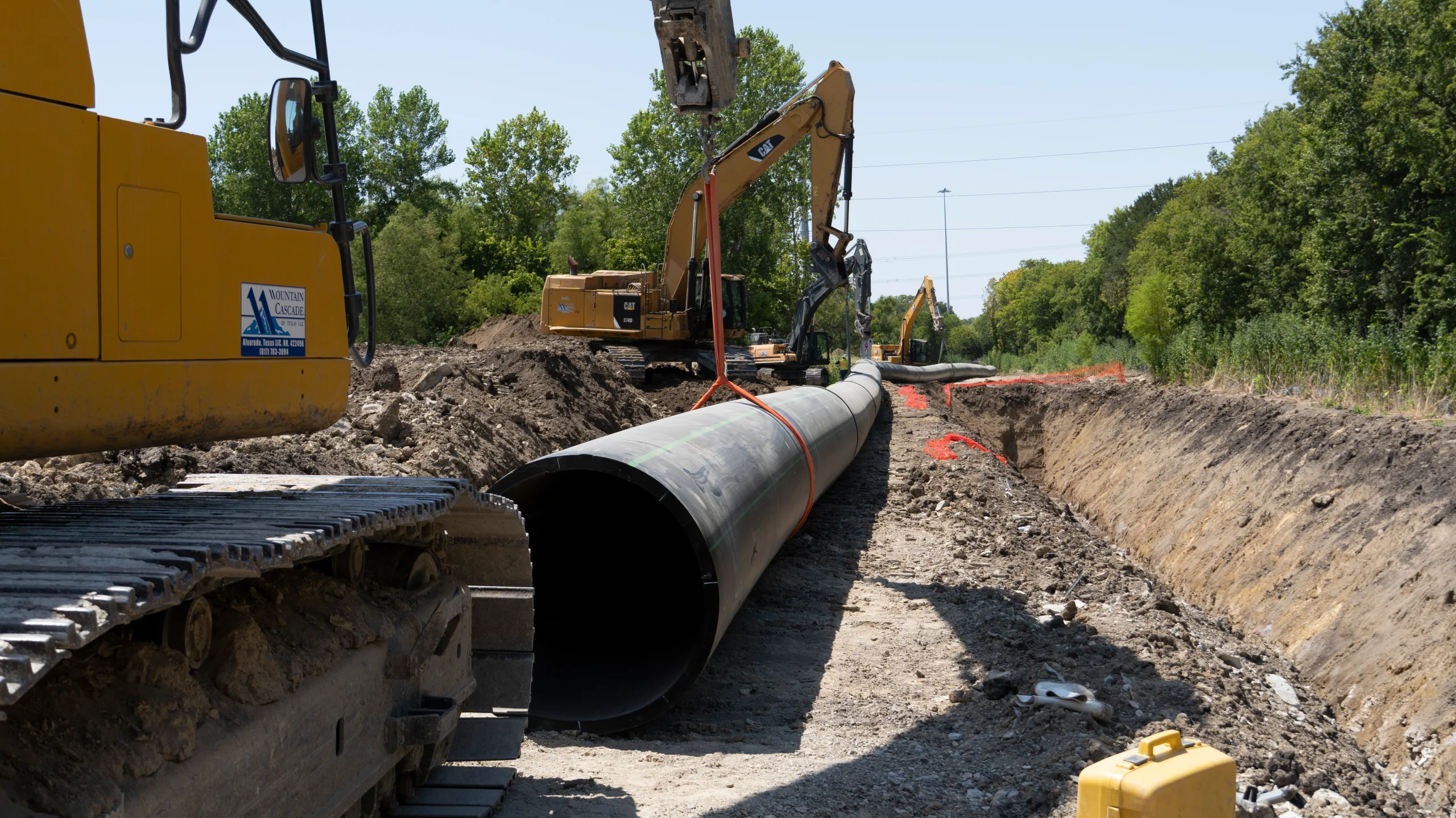
Once the trench was ready, those strings were installed, fused in the trench, and tied into the 16 prefabricated Spirolite manholes.
It’s easy to summarize that process as “fuse the pipe and install it.” The reality of building a large-diameter gravity sewer is considerably more precise.
Building a Gravity Sewer Takes Precision
With a gravity system like this, it is about more than ensuring that the trench follows a grade or pitch that allows wastewater to flow from point A to point B without pressure.
When manholes are prefabricated specifically for individual locations along the alignment, multiple variables have to come together accurately in the field.
Manhole Elevation
The top of the manhole needs to meet its required finished elevation, so as the trench depth changes along the gravity profile, the height of the manhole must match its specific location. That also takes into account the required foundation under the manhole.
Pipe Alignment
The prefabricated pipe sections passing through each structure must align with the incoming and outgoing sewer.
While HDPE flexibility allows for some variation from a straight line, the manhole can also accommodate designed changes in direction and help keep the line on path.
This is where surveyors and engineers on site work in sync with the design and field teams preparing the trench.
Maintaining Grade
Throughout installation, the sewer must maintain its engineered gravity profile while each manhole remains properly positioned and level.
One System, Multiple Teams
There is a close relationship between the teams that envision and engineer a job like this and the field crews that bring it to fruition.
In this case, that includes contractor Mountain Cascade of Texas, consulting engineer Christopher Haeckler, and HDR, Inc., along with ISCO’s fabrication, field and support teams.
Through demanding North Texas summer conditions, the work continues on an HDPE sanitary sewer system designed to help McKinney’s infrastructure keep pace with the community it serves.
Planning a gravity sewer or large-diameter wastewater project? Talk with ISCO about HDPE pipe, prefabricated structures, fusion, and field support.
Access our deep HDPE knowledge
field-reports
Large-Diameter HDPE Pipe to Solve Northern Colorado’s Long-Term Water Supply Challenge
FrontRange H2O Partners selected ISCO as the HDPE pipe supplier for the Vita H2O Project,...
field-reports
Cotino Bay Lagoon Infrastructure
35,000+ LF of HDPE pipe installed for lagoon infrastructure in Rancho Mirage. See how ISCO...
field-reports
24-Inch HDPE Water Main Emergency Repair
When a critical 24-inch domestic water main serving Texas A&M University developed a leak, ISCO...